
The banned cards and effective date
In the November 13 announcement, game director Dave Guskin confirms that eight cards and two battlefields will join the Standard and 2v2 Constructed ban list on November 23, 2026. The cards are Riven, Broken Blade; Zhonya's Hourglass; Stellacorn Herder; Nocturne, Horrifying; Rhasa the Sunderer; Brynhir Thundersong; Dazzling Aurora; and Baited Hook. The battlefields are Emperor's Dais and Star Spring.
The decision follows European Regional Championship results and internal testing. The team considers unhealthy representation, problematic play patterns and whether future releases are likely to make issues worse. The effective date accounts for upcoming events, reflecting its stated aim of avoiding changes within two weeks of premier-level tournaments.
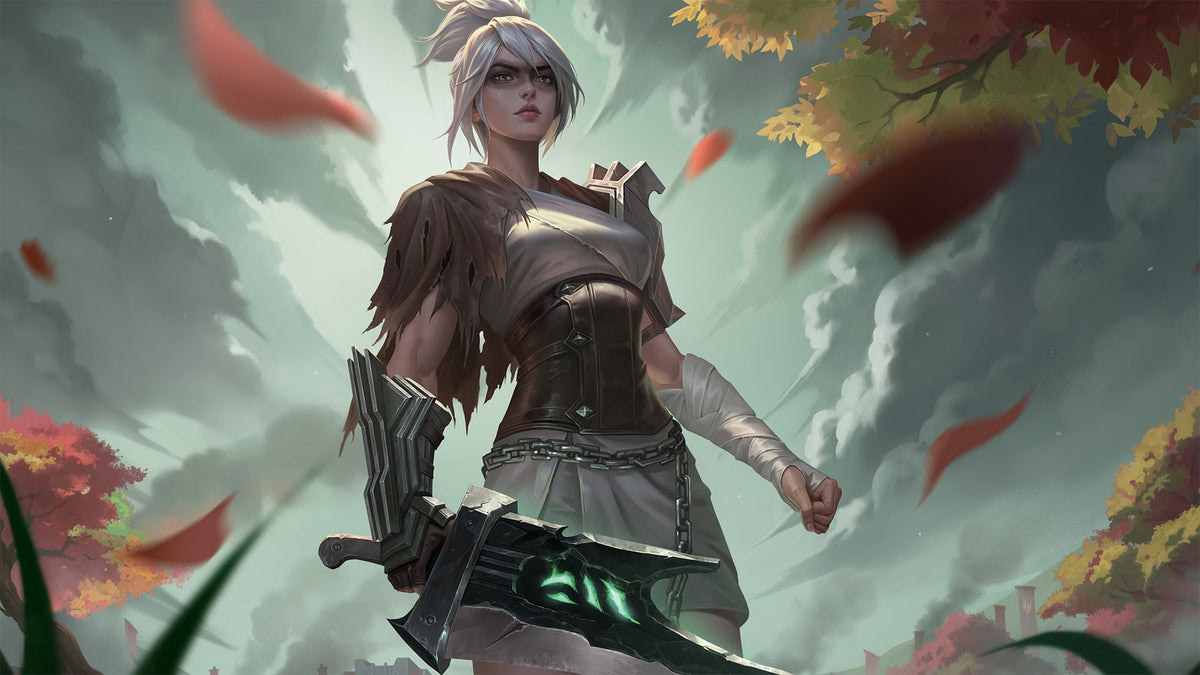
Riven: tournament results and low-risk conquers
Riven accounted for 43% of registered decks at the European Regional Championship, taking three of the top four places and eight of the top sixteen. According to the team, its win rate against the field in high-level competition is around 60% or higher, excluding mirror matches. Not winning the Regional therefore did little to ease concerns.
Riven, Broken Blade provides a reliable turn-two play for four Energy. Spending her buff to ready herself allows her to conquer with limited risk, particularly when she enters ready and gains a buff that same turn. Her option to spend the buff to stun also punishes opponents attempting to hold battlefields.
Zhonya's Hourglass protects units from removal, while Hidden helps it evade many answers to gear. When played from Hidden alongside Astral Heron, it also supplies the first card played while protecting the Heron. Stellacorn Herder rewards movement without limiting how often that reward can occur: in Riven decks, it can immediately replace itself when played to a battlefield. The team believes it covers the Calm domain’s weaknesses too effectively.
Star Spring and Emperor's Dais allow players to protect an exhausted unit used to conquer while retaining a ready unit to return to base. The reasoning echoes the earlier Reaver's Row ban: these sequences reduce interaction and the risk attached to conquering.
Kennen: the problems with Nocturne and Rhasa
Kennen represented about 15% of Regional entries, claimed three Top 8 places and won the event. Its signature spell and Legend ability make starts involving multiple Nocturnes or Rhasas more frequent, creating substantial battlefield pressure.
Nocturne, Horrifying can be played early for zero Energy without costing a card from hand when found and played through a reveal. The team is particularly concerned about openings with two or three copies and expects additional cards that look at the top of the deck to worsen the problem.
Rhasa the Sunderer rewards filling the Trash, something Kennen does especially well. It is a large unit that can be recovered repeatedly and played for zero Energy, leaving little opportunity cost. Future cards that fill the Trash are another reason for acting now.
Kai’Sa, Dazzling Aurora and the preemptive Baited Hook ban
For Kai’Sa, the concern with Brynhir Thundersong goes beyond preventing responses during its controller’s turn. Playing it in an opponent’s Beginning phase can stop that opponent from playing cards for an entire turn. Combined with offensive blink effects such as Temporal Breach, which banish a unit and ask its player to replay it, Brynhir also becomes a powerful removal tool against large units.
Dazzling Aurora provides free access to major threats such as Elder Dragon. The team says repeatedly fetching such threats pushes Energy-ramping decks toward a single structure and steers Body domain decks toward the same route to victory. More large units would increase that pressure.
Baited Hook is being banned despite its currently limited competitive presence. By checking Might rather than Energy cost, it can put expensive units into play for free with a limited search component. Testing with upcoming sets, including Legacy, revealed risky interactions, so the team is acting before January’s World Showcase rather than risking an emergency ban.
Regional lists and future interventions
Starting November 23, competitive circuits whose releases are not aligned with the global metagame will have separate ban lists. For those circuits, the list established by the end of a set’s season will apply from the beginning of that set’s local season. The ten announced bans will not affect events in Korea and Traditional Chinese regions until Radiance releases there. Several cards will temporarily become legal again pending the local releases of Spiritforged, Vendetta and Radiance; effective dates may vary around regional events.
Guskin describes this intervention as a transition from sets designed before launch to those informed by player data and discovered interactions, beginning with Legacy. The team acknowledges the impact on players who acquired these cards and is working toward supporting a future format where they can be played.
In 2027, the goals for format health will remain unchanged, but the team will have less tolerance for problematic cards. Ban announcements will use scheduled windows: the Friday two weeks before each Continental and the Friday two weeks after it.
For 2v2, there are no additional bans in this announcement beyond those shared with Standard. The team highlights Yasuo’s strength based on results and player feedback and is testing format changes, with more information planned for early 2027.


